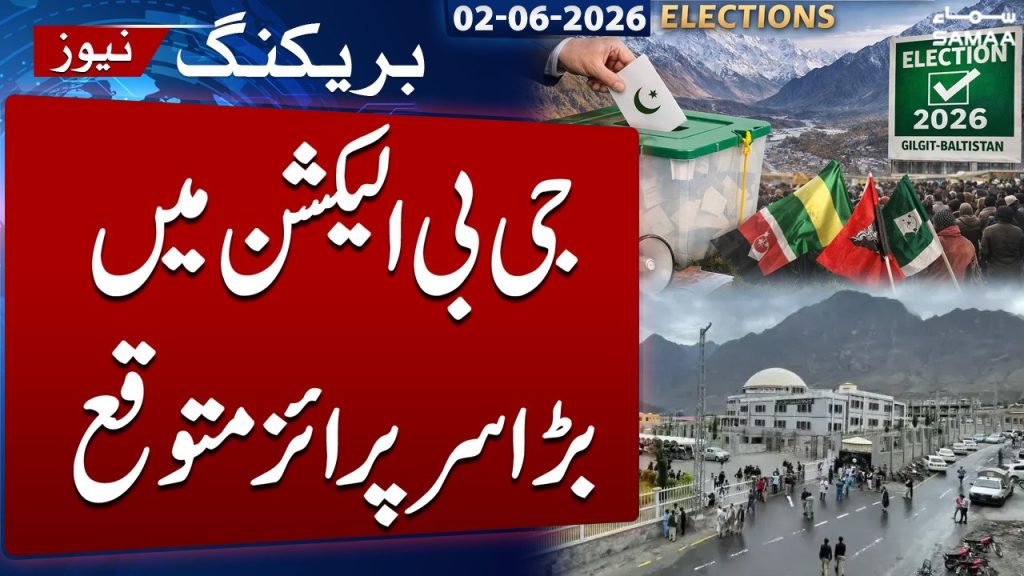
The countdown for the Gilgit-Baltistan Assembly elections has begun. About one million voters will exercise their franchise in the elections to be held on June 7. Political parties have intensified their election campaigns. Some districts and women voters can play a decisive role in this election. Which party is showing how strong it is in the Gilgit election? How tough is the competition in the election field? Elections will be held in 24 constituencies of the Gilgit-Baltistan Assembly on June 7. According to the Election Commission, the total number of registered voters has reached 958,480, including 537,772 male and 454,708 female voters. 403 candidates are trying their luck in the election field, including 272 independent candidates and 131 candidates from different political parties. According to the data, four districts have become key in the race to form a government. There are a total of about 600,000 voters in Diamer, Gilgit, Ghizer and Skardu, which constitute more than 62% of the total voters of Gilgit-Baltistan. The 13 seats in these districts can play an important role in determining the shape of the future government. Women voters can also play an important role in this election. There is a slight difference in the number of male and female voters in many constituencies. In Diamer-1, the difference between male and female voters is only 12 votes, in Gilgit-2, Hunza, Ghizer-2, Gilgit-3 and Skardu-2, female voters can prove to be the difference between victory and defeat. Interestingly, out of 403 candidates, only 8 are female candidates, which has once again brought the question of women’s representation in the electoral process under discussion._x000D_
_x000D_
These elections in Gilgit-Baltistan are not only local politics, they are also an important test of the public popularity of national political parties. Election activities are at their peak, rallies are underway, political parties are busy mobilizing voters. Now all eyes are on June 7, when one million voters will determine the political direction of Gilgit-Baltistan through their votes.